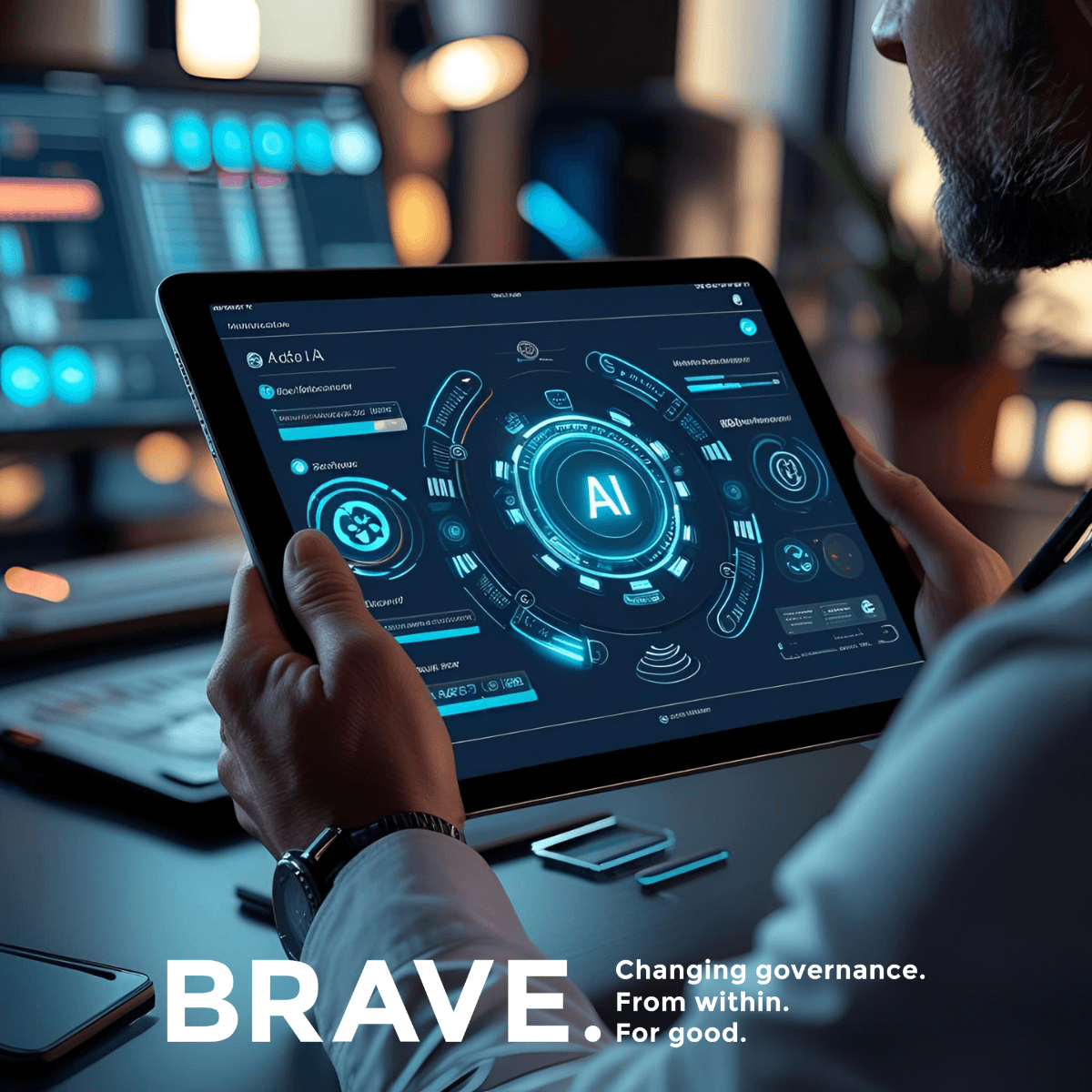

AI is in the boardroom!
Do we understand the implications?
We have been following with interest our colleagues and friends at the Centre for AI in Board Effectiveness. Their recent report providing insight into the CAIBE Board Member AI Research Stream findings makes for interesting and compelling reading.
(32) Centre for AI in Board Effectiveness: Posts | LinkedIn
Informal channels mean AI is in the boardroom.
The CAIBE research reveals what we probably already know: AI is entering the boardroom through informal channels and organisations cannot control this. Directors are using AI to summarise information, check details and facts and create their own analysis. Its invisible but influential. Historically those of us focussed on behaviours and culture have discussed the role of individuals with disproportionate influence within an organisation – those people who are not at the top of the organisation but are hugely respected and followed by many of the people within it. AI now takes its place amongst them.
The implications.
What does this mean in practice?
- AI is entering an organisation through consumer tools.
- There are no guardrails.
- Usage varies widely within a boardroom and the wider organisation.
- Usage focuses on preparation rather than decision making at the board level.
- Implications are unknown but rapidly emerging.
On the positive side, the CAIBE research indicates that directors are using the information to enable them to be better prepared for board meetings and discussions. They don’t use it to create their judgements but to inform them.
The concerns and challenges.
However, the result of this risks being an erosion of trust. Directors are receiving information through mechanisms other than the executive. They are forming views on the basis of external information which varies between them. And using this to form their judgements and make business critical decisions.
In addition, there cannot be the usual guards around security, accuracy or reliability of information. Data will be sourced from a multitude of sources. Machine learning within the consumer tools may well mean information from the organisation finds its way into the cumulative “knowledge” of the AI tool. Information that is relied on to make decisions is not documented and indeed may be over-relied on. Biases may drive conclusions that are inappropriate.
Responding to these challenges.
In this context, it is critical to have an honest and transparent debate in the boardroom about how the risks will be managed. They need to be documented so that directors can self-reflect on their response to them. Creating an inventory of the tools that directors use may support creating appropriate guardrails and/or making available in-house AI tools. Education on the risks will also enable directors to make informed decisions about how they use and where they rely on the information and insights gained.
Through our BRAVE:Integrity solutions we are examining the opportunities and risks created by AI and their integration with the broader risk, governance and control environment.
Through BRAVE:Legal we can ensure you are aware of the legal and regulatory obligations that are essential for you.

AUTHOR.
CARRIE STEPHENSON.